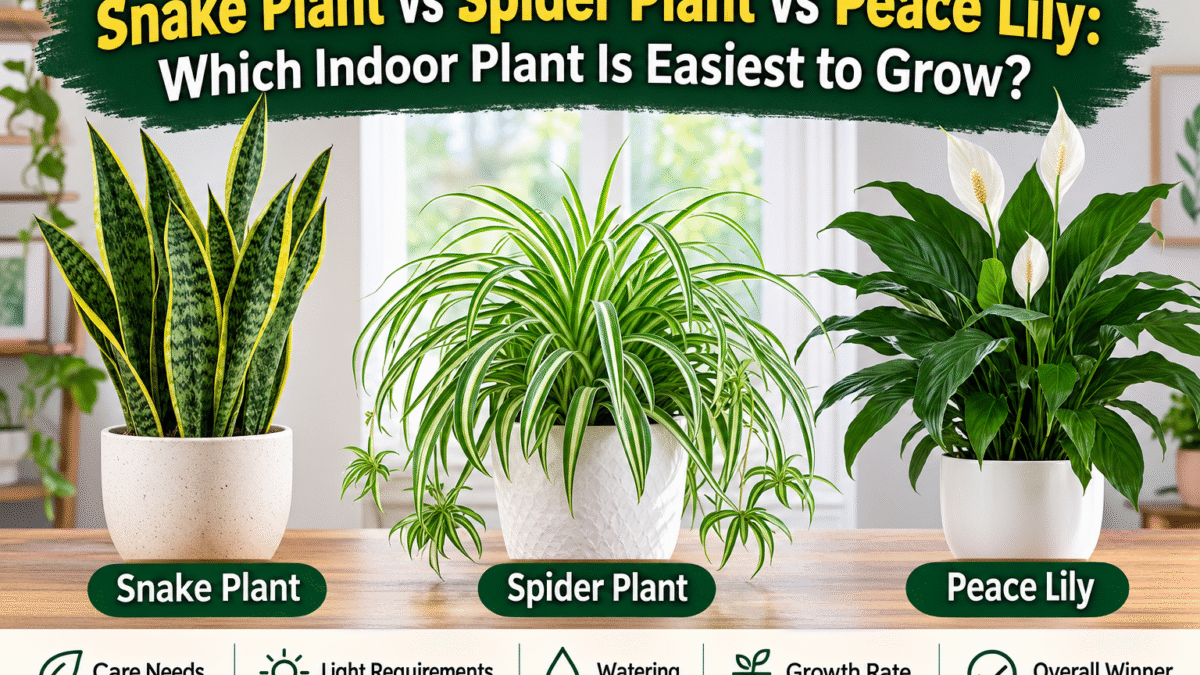
Indoor plants are a simple way to make your home feel fresh, green, and inviting. However, choosing the right plant can be challenging, especially if you are a beginner or have a busy schedule. Three popular options are the snake plant, spider plant, and peace lily. Each offers attractive foliage, but their watering needs, lighting preferences, and maintenance requirements differ.
So, which indoor plant is easiest to grow? The snake plant is generally the best choice for people who want a low-maintenance plant that tolerates occasional neglect. The spider plant is excellent for beginners who enjoy watching new growth develop, while the peace lily is ideal for those who love lush green leaves and elegant white flowers.
Let’s compare these three popular houseplants to help you find the best fit for your home.
1. Snake Plant: Best for Low-Maintenance Care
The snake plant (Dracaena trifasciata), also known as mother-in-law’s tongue, is famous for its tall, upright leaves and remarkable tolerance of neglect. Its stiff, sword-shaped foliage often features dark green patterns and yellow edges, making it an attractive addition to bedrooms, living rooms, and offices.
Light requirements
Snake plants adapt to a range of indoor lighting conditions, from low light to bright, indirect light. They generally grow faster in brighter indirect light, although they can survive in dimmer spaces. Avoid prolonged exposure to intense direct sunlight, which can scorch the leaves.
Watering needs
One of the biggest advantages of a snake plant is its low watering requirement. Its thick leaves store water, allowing it to tolerate dry conditions. Water only when the potting mix has dried out completely or nearly completely.
Overwatering is a common cause of problems, particularly root rot. Always use a pot with drainage holes and avoid leaving the roots sitting in water.
Growth and maintenance
Snake plants usually grow slowly to moderately, depending on the variety and environment. They rarely require frequent pruning or repotting and can remain attractive with minimal attention.
Best for: Busy homeowners, beginners, offices, and anyone who sometimes forgets to water their plants.
2. Spider Plant: Best for Beginners Who Enjoy Fast Growth
The spider plant (Chlorophytum comosum) is a cheerful, adaptable houseplant recognized by its long, arching leaves and small plantlets that develop on trailing stems. It looks particularly attractive in hanging baskets, on shelves, or in decorative pots.
Light requirements
Spider plants prefer bright, indirect light, although they can tolerate moderate light levels. Variegated varieties often maintain their contrasting leaf patterns better with sufficient indirect light.
Keep them away from harsh afternoon sunlight, which can cause leaf discoloration or scorching.
Watering needs
Spider plants generally prefer more regular watering than snake plants. Water when the top layer of soil begins to dry, allowing excess water to drain away.
They appreciate consistent moisture but should not remain waterlogged. If your tap water contains high levels of minerals or fluoride, you may notice brown leaf tips. Using filtered water may help in some cases.
Growth and maintenance
Spider plants are vigorous growers under suitable conditions. Mature plants can produce small plantlets, which can be rooted to create new plants.
Occasionally remove dead leaves and trim damaged tips to keep the plant looking neat. They may also develop thick roots that eventually make repotting necessary.
Best for: First-time plant owners, families, hanging baskets, and people who enjoy propagating plants.
3. Peace Lily: Best for Beautiful Flowers
The peace lily (Spathiphyllum) stands out for its glossy green leaves and distinctive white flower-like structures called spathes. It brings a sophisticated, tropical appearance to living rooms, bedrooms, and shaded indoor corners.
Despite its reputation as an easy houseplant, it generally requires more consistent care than a snake plant.
Light requirements
Peace lilies prefer medium to bright indirect light. They can tolerate lower light, but flowering is often reduced when light levels are insufficient. Direct sunlight can damage their leaves.
A position near a bright window with filtered light is usually a good choice.
Watering needs
Peace lilies prefer evenly moist soil, so they need more frequent attention than snake plants. Water when the top inch or two of soil feels dry, adjusting the schedule according to temperature, pot size, and light.
Their leaves may droop noticeably when thirsty, making it easier to recognize a watering problem. However, repeated wilting can stress the plant, so don’t rely on drooping as your regular watering signal.
Growth and maintenance
With appropriate light, moisture, and warmth, peace lilies can produce attractive white spathes. Remove fading flowers and yellow leaves to maintain their appearance.
Keep peace lilies away from pets and children who might chew them. They contain insoluble calcium oxalate crystals and can irritate the mouth if ingested.
Best for: Plant owners who appreciate flowering houseplants and don’t mind checking soil moisture regularly.
Snake Plant vs Spider Plant vs Peace Lily: Quick Comparison
| Feature | Snake Plant | Spider Plant | Peace Lily |
|---|---|---|---|
| Overall difficulty | Very easy | Easy | Easy to moderate |
| Light preference | Low to bright indirect | Moderate to bright indirect | Medium to bright indirect |
| Watering frequency | Infrequent | Moderate | More frequent |
| Growth rate | Slow to moderate | Moderate to fast | Moderate |
| Flowers | Rare indoors | Small, occasional flowers | Showy white spathes |
| Propagation | Division or leaf cuttings, depending on variety | Plantlets or division | Division |
| Best feature | Tolerates neglect | Produces baby plants | Attractive white flowers |
| Pet safety | Toxic if chewed | Generally considered non-toxic | Toxic if chewed |
Care requirements vary with growing conditions, cultivar, pot size, and season. “Easy” does not mean that a plant can thrive without suitable light, drainage, and watering.
Which Indoor Plant Is Easiest to Grow?
The snake plant is the overall winner for ease of care. Its ability to tolerate dry soil, adapt to different indoor light levels, and grow with little maintenance makes it particularly suitable for busy people and beginners.
The spider plant is a close second, especially if you want a fast-growing plant that produces new plantlets. It requires more regular watering but is forgiving when its basic needs are met.
The peace lily is the best choice if flowers and lush foliage matter more to you than minimal maintenance. It needs more consistent moisture and benefits from suitable indirect light to flower well.
Here is a simple way to decide:
- Choose a snake plant if you want a hardy plant that doesn’t need frequent watering.
- Choose a spider plant if you enjoy leafy growth and want to propagate new plants.
- Choose a peace lily if you want elegant white blooms and don’t mind monitoring soil moisture.
Tips for Growing All Three Plants Successfully
Regardless of your choice, a few basic habits can make a big difference.
- Choose the right pot: Use a container with drainage holes to reduce the risk of root rot.
- Match watering to the plant: Let snake plant soil dry thoroughly, but keep spider plant and peace lily soil from becoming excessively dry.
- Provide suitable light: Bright, indirect light is a reliable starting point for all three.
- Avoid overfertilizing: Feed sparingly during active growth and follow the fertilizer’s instructions.
- Check leaves regularly: Yellowing, browning, or wilting can indicate watering, light, or other environmental problems.
Frequently Asked Questions (FAQs)
1. Which indoor plant is best for complete beginners?
The snake plant is usually the best option because it tolerates infrequent watering and adapts to a variety of indoor conditions. A spider plant is another excellent choice if you prefer faster growth.
2. Which plant needs the least water?
The snake plant generally needs the least frequent watering because its thick leaves store water. Always check the soil before watering rather than following a rigid weekly schedule.
3. Can snake plants, spider plants, and peace lilies grow in low light?
All three can tolerate some lower-light conditions, but none grows optimally in very dark spaces. Snake plants and spider plants may survive in lower light, while peace lilies may produce fewer flowers.
4. Which of these plants is safest for pets?
Spider plants are generally considered non-toxic to cats and dogs. Snake plants and peace lilies can cause problems if chewed or ingested. Keep the latter two out of pets’ reach.
5. Which plant grows the fastest?
Spider plants often grow quickly under favorable conditions and produce plantlets that can be propagated. Snake plants usually grow more slowly, while peace lily growth depends on light, warmth, and consistent moisture.
Final Verdict
When comparing snake plants, spider plants, and peace lilies, the easiest plant to grow depends on your routine and preferences. However, the snake plant is the best overall choice for low-maintenance indoor gardening. It requires less frequent watering and tolerates occasional neglect better than the other two.
Choose a spider plant for easy propagation and lively foliage, or a peace lily for its elegant flowers. With the right light, suitable watering, and good drainage, all three can become beautiful additions to your indoor garden.

Leave A Comment